

University enrolment in Turkey
University enrolment in Turkey is simpler when one team handles every step.
You can enrol as an international student in associate, bachelor’s, master’s and doctoral programmes at public and private (foundation) universities in Turkey. Most programmes offer Turkish- and English-taught options.
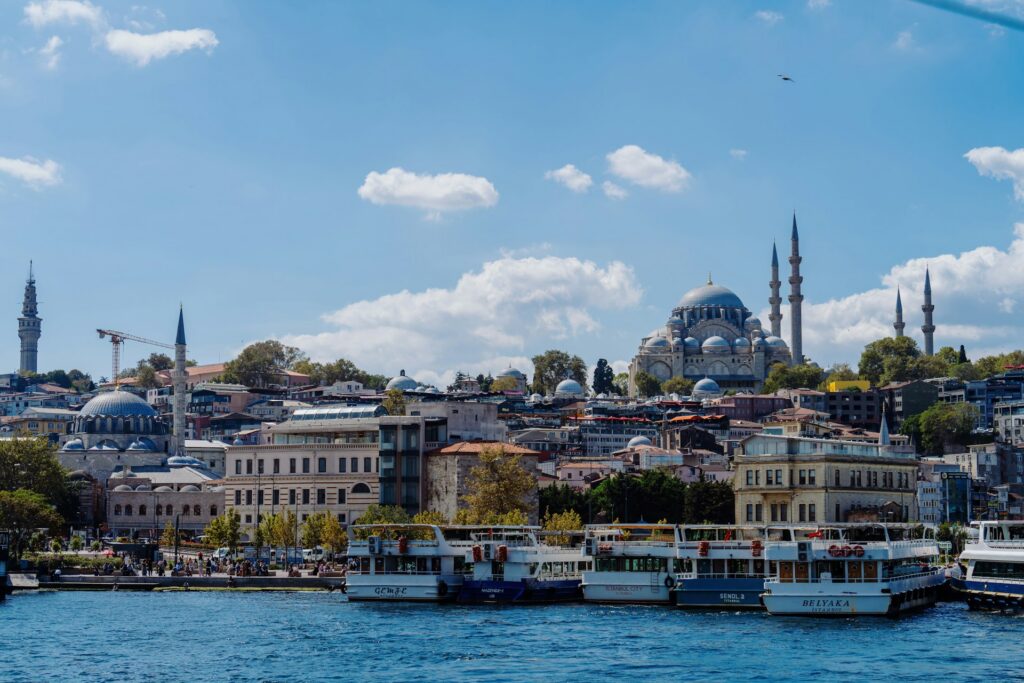
Especially with our partner private universities in Istanbul, we handle programme selection, application, acceptance letter, high-school equivalence, translation and final enrolment from start to finish. After enrolment we also prepare your student residence permit.
Who can apply
- International students who hold or will soon hold a high-school diploma (bachelor’s)
- Bachelor’s graduates (master’s)
- Master’s graduates (doctorate)
YÖS, SAT or language proficiency requirements vary by university.
Required documents
- Passport
- High-school diploma with sworn translation
- Transcript with sworn translation
- Photograph
- Language proficiency certificate depending on the programme
- High-school equivalence certificate at final enrolment
How the process works
- We discuss your goals and budget.
- We recommend suitable universities and programmes.
- We submit the application and obtain the acceptance letter.
- We complete equivalence and translation and finalise your enrolment.
- We prepare your student residence permit application.
University enrolment in Türkiye: an overview
Türkiye welcomes many international students every year thanks to its reasonable cost of living, long-established state universities, fast-growing foundation universities and its location between Europe and Asia. For a foreign student, however, university enrolment follows a different path from the one Turkish citizens take. International applicants are usually assessed under each university’s own quotas and admission rules rather than through the central national exam.
University enrolment involves many connected steps, including diploma recognition, document translation, language proficiency, a student visa and a residence permit. If one step is left incomplete, final registration can be delayed even after you receive an acceptance letter. On this page we explain university enrolment from start to finish in plain language, so you can plan which step to take and when.
Who is this service for?
At Cantürk Consultancy, we help international applicants and their families turn their study plans in Türkiye into a realistic roadmap. Our service is especially useful for:
- Applicants who finished secondary school abroad and want to start an associate or bachelor’s degree in Türkiye.
- Students who completed a bachelor’s degree in their own country and want to do a master’s or doctorate in Türkiye.
- Students at a university abroad who are considering a transfer to a university in Türkiye.
- Parents who want to follow their child’s education process from a distance.
- Young foreign nationals already living in Türkiye who want to start university.
Our team speaks Turkish, Russian, English, Uzbek and Turkmen, so we can communicate with applicants from Central Asia and Russian-speaking countries in their own language.
State and foundation universities: the differences
Higher education institutions in Türkiye fall into two main groups: state universities and foundation (private, non-profit) universities. State universities generally admit international students according to the calendar, quotas and admission criteria each one announces. Some hold their own exam, while others rely on international exam results or secondary school grades.
Foundation universities often have a more flexible application calendar, and their admission criteria vary by programme. Tuition depends on the university, the programme and the language of instruction, and scholarships or discounts follow each institution’s own policy.
Which type of university suits you should be decided according to your budget, academic background, target programme and preferred language of instruction. The district where the campus is located, accommodation options and student communities also shape your daily life directly.
The university enrolment process step by step
- First consultation and profile review: your diploma, grades, language level, budget and career goals are reviewed together.
- Choosing programmes and universities: suitable programmes and universities are listed, and preferences such as language, city and campus are clarified.
- Preparing documents: your diploma, transcript and passport are gathered, and the necessary ones are given a sworn translation and certification.
- Submitting the application: the application is sent through the channel the university specifies, in the required format and on time.
- Receiving the acceptance letter: after a positive assessment, the university issues a conditional or unconditional acceptance letter.
- Visa and travel plan: where needed, a student visa is obtained from a Turkish mission abroad with the acceptance letter.
- Final registration: after arriving in Türkiye, the original documents are submitted to the university and registration is completed.
- Student residence permit: after registration, a residence permit application is made within the period set by law.
Documents required for university enrolment
The document list for university enrolment varies by university and programme, but international students are usually asked for the following:
- A secondary school diploma or certificate of graduation with a transcript of grades.
- For postgraduate applications, a bachelor’s diploma and transcript.
- A copy of the passport page showing your personal details.
- A passport-style photograph.
- International exam results or a language proficiency certificate, if available.
- For some programmes, a statement of purpose, a reference letter or a CV.
- At the final registration stage, an equivalence certificate or proof that an equivalence application has been made.
Documents in a foreign language need a sworn Turkish translation and, in most cases, notarisation. Depending on the issuing country, an apostille or consular legalisation may also be requested. Clarifying which certification each document needs before you apply prevents delays later.
Diploma equivalence and recognition
A secondary school diploma obtained abroad must be recognised in Türkiye through an equivalence certificate issued by units of the Ministry of National Education. The recognition of bachelor’s degrees is a separate process run by the Council of Higher Education (YÖK). Some universities do not ask for the equivalence certificate at the admission stage but require it at final registration or before graduation.
An equivalence application usually includes the original diploma and transcript, certified translations, a passport copy and any additional documents the institution requests. The result depends on the content of the document and on the institution’s assessment.
For this reason, we recommend planning the equivalence process at the very start of university enrolment. Otherwise, you may face an unexpected obstacle at final registration or when receiving your diploma, even after you have been accepted.
Language proficiency and preparatory year
International students seeking university enrolment in programmes taught in Turkish are generally expected to prove their Turkish proficiency. At most universities, students without a certificate either take a Turkish preparatory programme or sit a placement test at the university’s language centre.
For programmes taught in English, an internationally recognised language exam result or the university’s own proficiency exam is used. Students who do not reach the required score are placed in an English preparatory class.
A preparatory programme can extend the total length of study, so it must be taken into account when planning your budget and time. Starting a language course before you apply can improve your chances in the preparatory exam and help you move on to your department courses sooner.
Application calendar
Universities usually accept international applications for university enrolment separately for the autumn and spring semesters. Application dates are announced every year in each university’s official notices and differ from one institution to another. Some state universities keep the application window short, while foundation universities may offer a longer one.
When the acceptance letter arrives, how soon a visa appointment is given and how long the equivalence process takes all depend on the season and on each institution’s workload. Instead of promising a fixed timeframe, we recommend planning your university enrolment applications as early as possible and having your documents ready before the semester begins.
Student visa and entry to Türkiye
Citizens of countries without a visa exemption generally obtain a student visa from the Turkish embassy or consulate in their home country, using their acceptance letter. The visa application usually includes a passport, the acceptance letter, a photograph and any additional documents the mission requests.
Students who enter Türkiye under a visa exemption must also apply for a student residence permit after registration. Visa types, exemption periods and entry conditions vary from country to country, so check the current rules before making travel plans.
At this stage, we pay close attention together to whether your documents are complete and consistent. When the information given in the visa application matches the information given to the university, later residence permit procedures also become easier.
Final registration and the student residence permit
The acceptance letter is not the last step of university enrolment. After arriving in Türkiye, you must complete final registration with your original documents on the dates the university sets. Once final registration is complete, you receive a student certificate, which is one of the core documents for the residence permit application.
The student residence permit application is made through the e-Ikamet system of the migration authorities, and on the appointment day you attend the Provincial Directorate of Migration Management with your documents. Applying within the period set by law is essential to avoid an unlawful stay and the administrative sanctions linked to it. We also help with completing the form, booking the appointment and checking documents during the residence permit process.

Transfers and postgraduate applications
For students at a university abroad who want to transfer to a university in Türkiye, transfers are made under each university’s own regulations and the quotas it announces. A transcript, course descriptions and a student certificate are usually requested, and the university’s relevant board assesses which completed courses can be recognised.
Master’s and doctoral applications may require a bachelor’s diploma, a transcript, a language certificate and, for some programmes, an ALES or equivalent exam result, a statement of purpose and reference letters. Interviews are also common at postgraduate level.
A strong and consistent academic file directly affects your chances of university enrolment at postgraduate level. In your statement of purpose, explain clearly why you chose the programme and what your future goals are.
Common mistakes during university enrolment
- Leaving it to the last day: translation, apostille and equivalence take time, and a late application can mean the quota for your preferred programme is already full.
- Different spellings of your name: a name written differently in the passport, diploma and translations can cause problems with registration and residence procedures.
- Submitting uncertified translations: documents not translated by a sworn translator or lacking the required certification may not be accepted.
- Choosing a programme on price alone: language of instruction, accreditation, preparatory period and city should not be ignored.
- Postponing the residence permit: delaying the residence application after final registration can lead to administrative sanctions.
- Trusting unverified intermediaries: be careful with people who promise guaranteed admission and give no official information.
Special cases: minors and scholarships
University enrolment applications from candidates under eighteen may require additional documents such as parental consent, a power of attorney or a consent letter. These must be issued and certified in the student’s home country and translated into Turkish. The university or the dormitory management may also ask for information about the minor’s accommodation and who is responsible for them in Türkiye.
Government-funded programmes such as Türkiye Scholarships have their own application calendar and assessment process. Scholarships and discounts offered by foundation universities vary according to academic success, programme and institutional policy.
Researching scholarship options before applying helps you calculate your total cost of study accurately. Remember that scholarships usually come with conditions, such as keeping a certain grade average each semester.
Translation, apostille and related services
University enrolment rarely stands alone; it usually runs alongside translation, certification and residence procedures. At Cantürk Consultancy you can access these services in one place:
- Sworn translation in 42 languages and support with notarisation.
- Guidance on documents that need an apostille or consular legalisation.
- Student residence permit applications and renewals.
- Information on health insurance options for foreigners.
- Document preparation for diploma equivalence applications.
Having the same team follow all of these services keeps your documents consistent and saves you from going back and forth between different offices.
Student life in İstanbul: practical tips
İstanbul is a large, lively city that hosts a great many universities. Its size also makes planning your daily life important. These tips can make your first weeks easier:
- When choosing accommodation, consider travel time to campus and public transport connections.
- Get an İstanbulkart for public transport and ask your university about the conditions for student discounts.
- Prepare your address registration and rental contract so that they are suitable for your residence permit application.
- When getting a Turkish phone line, check the registration rules for devices brought from abroad.
- Our office in Fatih is centrally located with good public transport links, which makes it easy to reach for a first meeting.
How we work with students
Every student’s situation is different, so instead of ready-made packages we create a personal plan. The first consultation is free and can take place at our office, by phone, on WhatsApp or through an online appointment. We review your documents and explain the suitable options and possible risks openly. Where it makes sense, we may suggest applying to more than one university in parallel, so you do not depend on a single institution’s decision.
Throughout your university enrolment we keep track of correspondence from universities, requests for missing documents and registration dates. The admission decision always belongs to the university; our role is to make sure your file is complete, accurate and submitted on time.
Choosing a programme and a university
Choosing the right programme is as important as successful university enrolment. Even if admission is easy, a programme that does not suit you can later lead to extra procedures such as a transfer or a change of department. Before deciding, ask yourself the following questions:
- In which country and in which field do you plan to work after graduation?
- Is the programme taught in Turkish, in English or in both?
- Are there special conditions for the degree to be recognised in your home country?
- Does the programme include internships, laboratory work and practical training?
- How long will your studies last including any preparatory year, and does your budget allow for it?
For professional programmes such as medicine, dentistry, pharmacy and law in particular, there may be additional conditions for recognition in your home country, so it is worth confirming this with the competent authority there before applying.
Frequently asked questions about university enrolment
- Can I start university without speaking Turkish? Yes. Many universities offer a Turkish preparatory programme, or you can apply to programmes taught in English. Preparatory study is added to the length of your studies.
- Do I need to be in Türkiye for university enrolment? The application and admission stages can often be handled remotely, but you must be in Türkiye for final registration and the residence permit.
- Does the acceptance letter replace a residence permit? No. The acceptance letter and final registration provide documents for the residence permit application, but the permit must be obtained separately.
- Do you guarantee admission? No. The admission decision belongs only to the university; we work to make sure your file is complete and accurate.
- Can my family follow the process from home? Yes. We can stay in touch with parents through WhatsApp and online meetings.
Why Cantürk Consultancy?
- Partner universities: we work with many foundation universities in İstanbul and keep up to date with their programme information.
- Your own language: our team speaks Turkish, Russian, English, Uzbek and Turkmen.
- One point of contact: university enrolment, sworn translation in 42 languages, residence permits and health insurance are handled at the same office.
- Legal support: we work with our partner lawyers when needed.
- Free first consultation: at our office in Fatih, on WhatsApp or through an online appointment.
- Honest guidance: we do not promise admission; we offer realistic options.
Contact us today to start your study plans in Türkiye with the right roadmap.
University enrolment: frequently asked questions
How do international students enrol at a university in Turkey?
For university enrolment, international students usually apply through the university’s international student application with accepted exam results or their high school grades. After the acceptance letter come final registration and the student visa or student residence permit. We manage the whole process.
What is high school diploma equivalence?
Diploma equivalence is a certificate from the Directorate of National Education confirming that your foreign high school diploma equals a Turkish diploma. It requires an apostilled sworn translation of your diploma and transcript. We plan it in line with the university enrolment calendar.
Which documents are needed for university enrolment?
A passport, high school diploma and transcript with sworn translations, the equivalence certificate, biometric photos and, if available, a language certificate are usually required. Requirements vary by university and programme, so we prepare a checklist for each application.
How do I get a residence permit after enrolment?
After final registration you apply for a student residence permit with the student certificate from your school, before your visa or visa-free period ends. Our university enrolment service includes the student residence permit application.
Contact
- Mesihpaşa Mah. Mesihpaşa Cad. No:1 Erseven Business Center Floor:1 No:12, Fatih / Istanbul
- +90 535 934 50 84
- info@canturkdanismanlik.com.tr
Free preliminary assessment
Send us your documents via WhatsApp; we will review your situation the same day and give you a roadmap.


